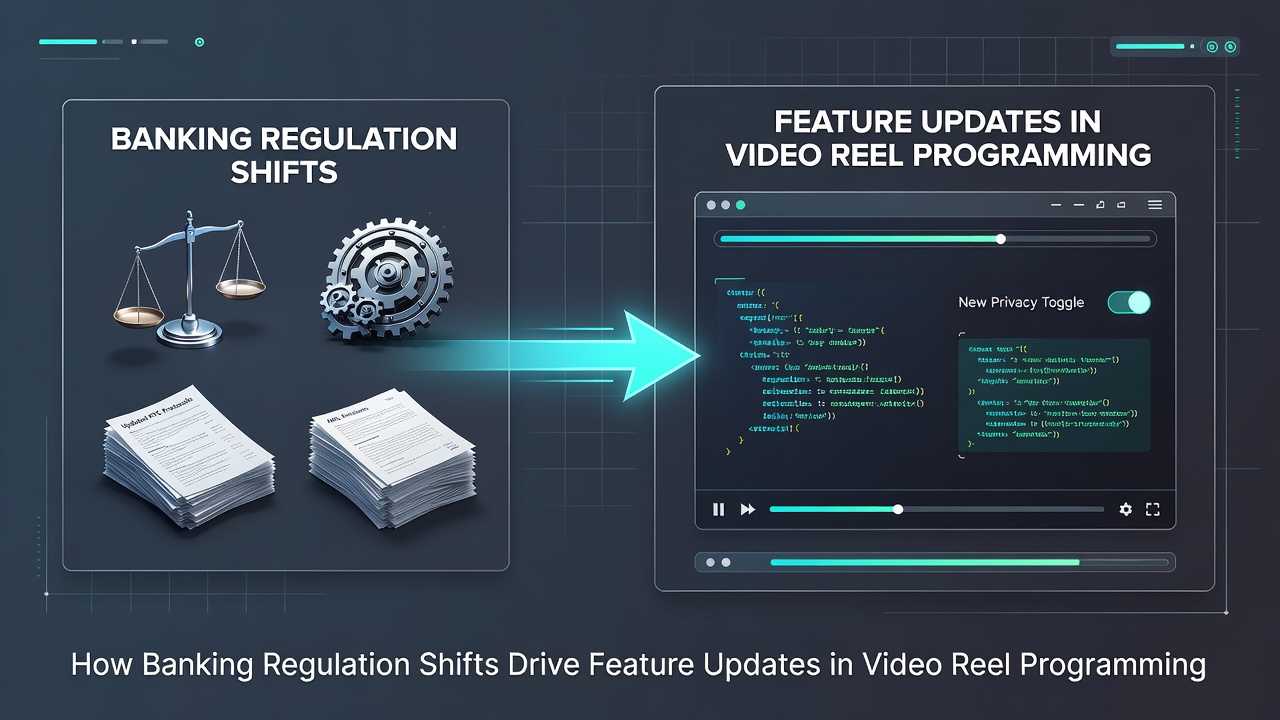
How Banking Regulation Shifts Drive Feature Updates in Video Reel Programming
Banking regulation changes have prompted developers to embed new compliance mechanisms directly into video reel programming frameworks, and these adjustments often appear in real-time transaction monitoring modules as well as automated limit enforcement tools. Data from regulatory filings shows that shifts in anti-money laundering requirements across multiple jurisdictions have led programming teams to integrate dynamic data logging functions that track player spending patterns without interrupting reel spin cycles. Observers note that such updates became more frequent after 2024 when several oversight bodies introduced stricter reporting thresholds for electronic fund transfers in gaming environments.
Regulatory Triggers and Their Technical Ripple Effects
Payment service directives in the European Union have required reel software to accommodate instant verification calls to banking APIs, and this integration forces programmers to rewrite core modules that handle deposit confirmations while maintaining seamless animation loops on the reels themselves. In North America, updates from the Financial Crimes Enforcement Network have pushed similar modifications where transaction flags must trigger within milliseconds of a wager placement, compelling developers to optimize code paths that previously focused only on random number generation and visual rendering. Research indicates these changes often involve adding encrypted audit trails that log every reel outcome alongside corresponding financial movements.
Canadian provincial regulators released guidance in early 2025 that emphasized source-of-funds verification, and programmers responded by building conditional branching into video reel engines that pause bonus round activations until external banking confirmations clear. This approach connects directly to existing responsible gaming overlays without requiring separate applications, and the result appears in smoother user flows that satisfy both entertainment and compliance standards. Figures from industry reports reveal that studios allocating resources to these hybrid features reduced post-deployment compliance adjustments by notable margins compared to earlier cycles.
Feature Updates in Response to Global Banking Standards
Developers have incorporated geofencing and velocity checks into reel programming to align with evolving know-your-customer rules that vary by region, and these additions sit alongside traditional payline calculations so that regulatory checks execute in parallel threads. One documented case involved Australian oversight adjustments that mandated real-time spend alerts during extended play sessions, leading teams to embed notification triggers that activate based on cumulative bet totals rather than fixed time intervals. Such modifications maintain the core reel mechanics while satisfying external reporting obligations that banking institutions now enforce more rigorously.

Programming libraries have evolved to include modular compliance hooks that allow quick adaptation when new banking rules emerge, and this design pattern gained traction after several large-scale platform migrations in 2025 demonstrated the efficiency of separating financial logic from visual reel sequences. Data shows that platforms adopting these modular approaches handled subsequent rule changes with fewer full recompilations, and the pattern has spread to smaller development groups that previously managed updates through manual code reviews.
Implementation Patterns Observed in August 2026
By August 2026, several major reel engines had rolled out mandatory integration points for digital currency transaction reporting, and these updates followed announcements from bodies such as the Monetary Authority of Singapore that expanded oversight of virtual asset flows into gaming accounts. Programmers adjusted reel feature triggers to reference external ledgers before unlocking progressive jackpot sequences, and this step added latency checks that teams optimized through asynchronous processing techniques. Evidence from technical briefings indicates that such layered verifications now form standard components in new title releases rather than optional add-ons.
Industry associations including the European Gaming and Betting Association have documented how these banking-driven modifications influence testing protocols, with increased emphasis on end-to-end transaction simulations that run alongside traditional RNG certification processes. Developers often cite the need to balance regulatory demands against performance benchmarks, and the result appears in refined algorithms that minimize any perceptible delay during high-stakes reel spins. Reports from research institutions further highlight that cross-border operators face compounded requirements when serving players under multiple banking regimes simultaneously.
Conclusion
Banking regulation shifts continue to shape the architecture of video reel programming through direct requirements for monitoring, verification, and reporting functions that integrate at the code level. These updates appear consistently across jurisdictions where financial oversight bodies adjust thresholds or introduce new verification layers, and programming practices have adapted by prioritizing modular, auditable features that coexist with core gameplay elements. Observers tracking developments through 2026 note that the pattern shows no sign of slowing as electronic payment ecosystems expand and intersect more deeply with regulated gaming platforms.